Carousel
Web App
SaaS
Car Subscription

A full redesign of the member application for a Honolulu-based car subscription service. Rebuilt every flow from inventory browsing to renewals, trade-ins, and billing.
Context
Carousel had a working product, but the member experience had not kept up. Subscribing required staff back-and-forth, renewals were confusing, and document management was scattered.
- Members had no clear self-serve path from browsing to reserving a vehicle
- Renewal and trade-in flows required manual staff intervention
- Document uploads, insurance, and billing all lived in disconnected states
- No design system existed, making consistency impossible at scale
Role
Lead Product Designer · 4.5 months
What I owned
- Design system architecture and component library
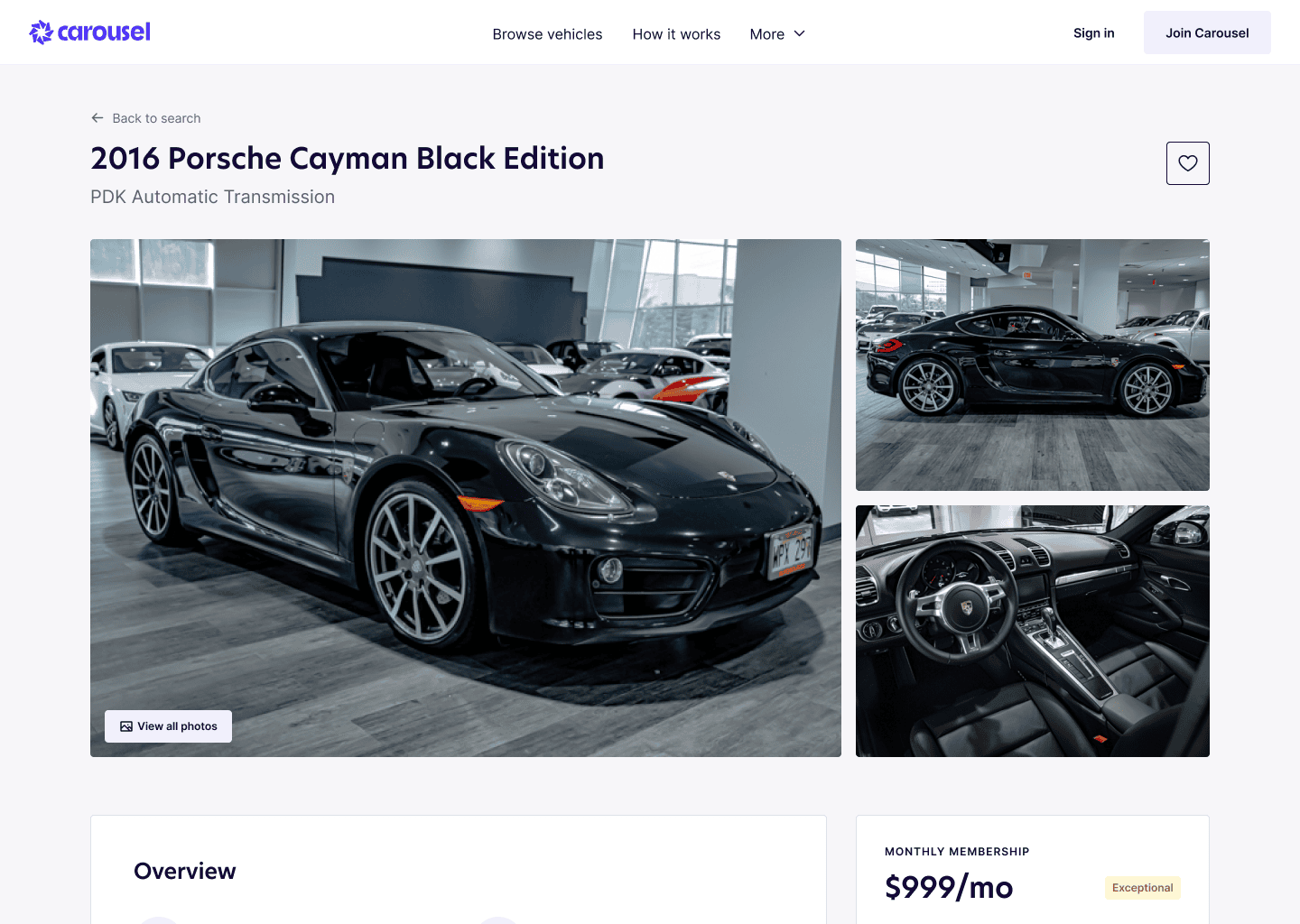
- Inventory browsing and vehicle detail flows
- New customer reservation flow (single and joint applicant)
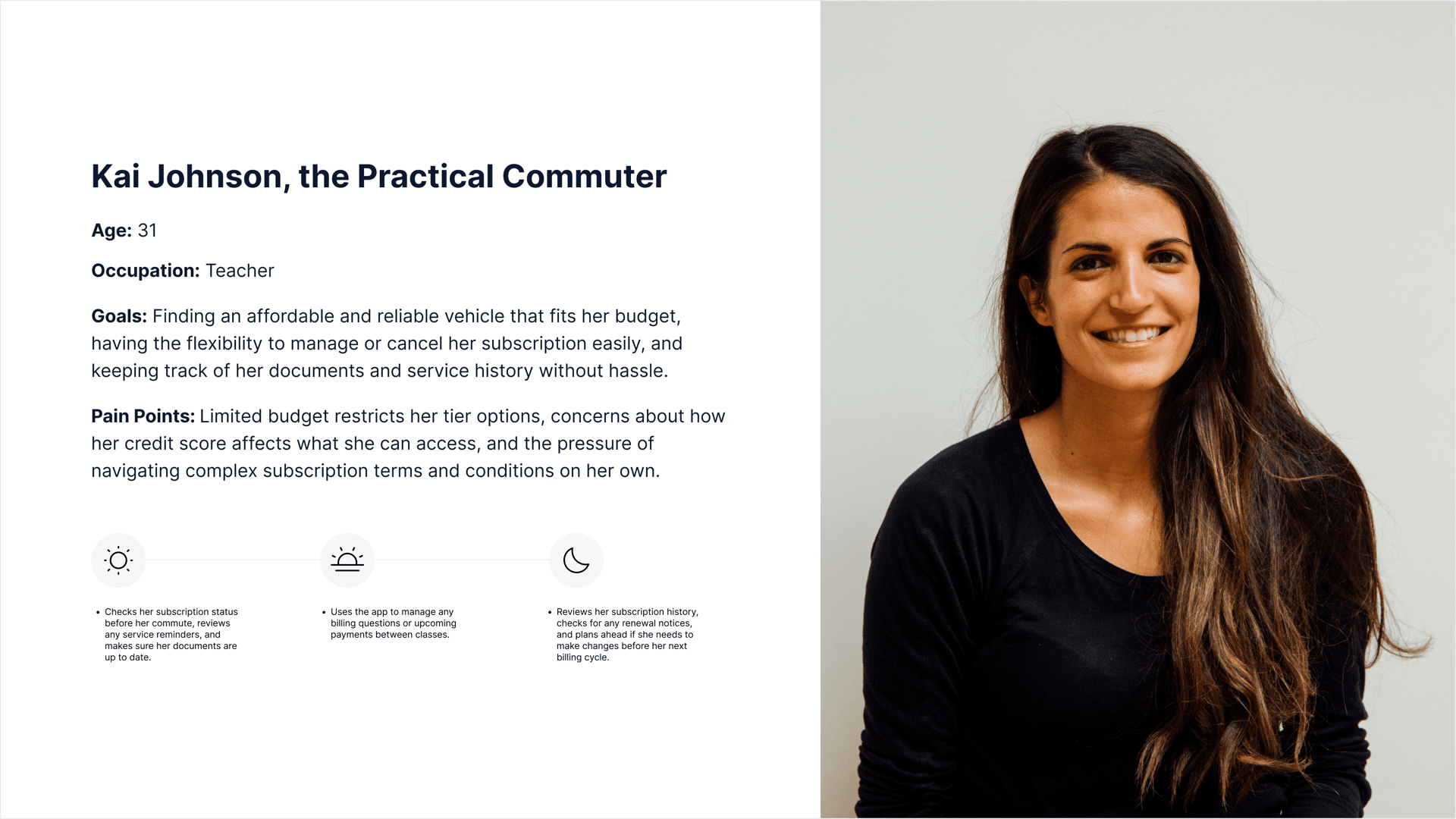
- User research synthesis and persona alignment
- Cross-flow consistency and design QA
Requirements
Before any design work began, I mapped the full feature scope with stakeholders. These requirements were defined at kickoff as a shared checklist to keep the team aligned throughout.
Decisions
Build the design system before the screens. Two designers in parallel across a dozen flows needed a shared foundation. Without one, we would have drifted on every pattern decision: form field states, modal behavior, empty states, error handling. Shared components made every high-density screen faster to build and easier to review.
Split reservation into two flows rather than one adaptive form. Joint applicants need double the inputs: info blocks, documents, and credit checks. Separate flows kept the code clean.
Integrate the credit check inline rather than as an upfront gate. An upfront credit gate would have hurt conversions and increased drop-off. Placing it mid-flow kept more people engaged, and borderline scores saw qualifying tier options rather than a rejection screen.

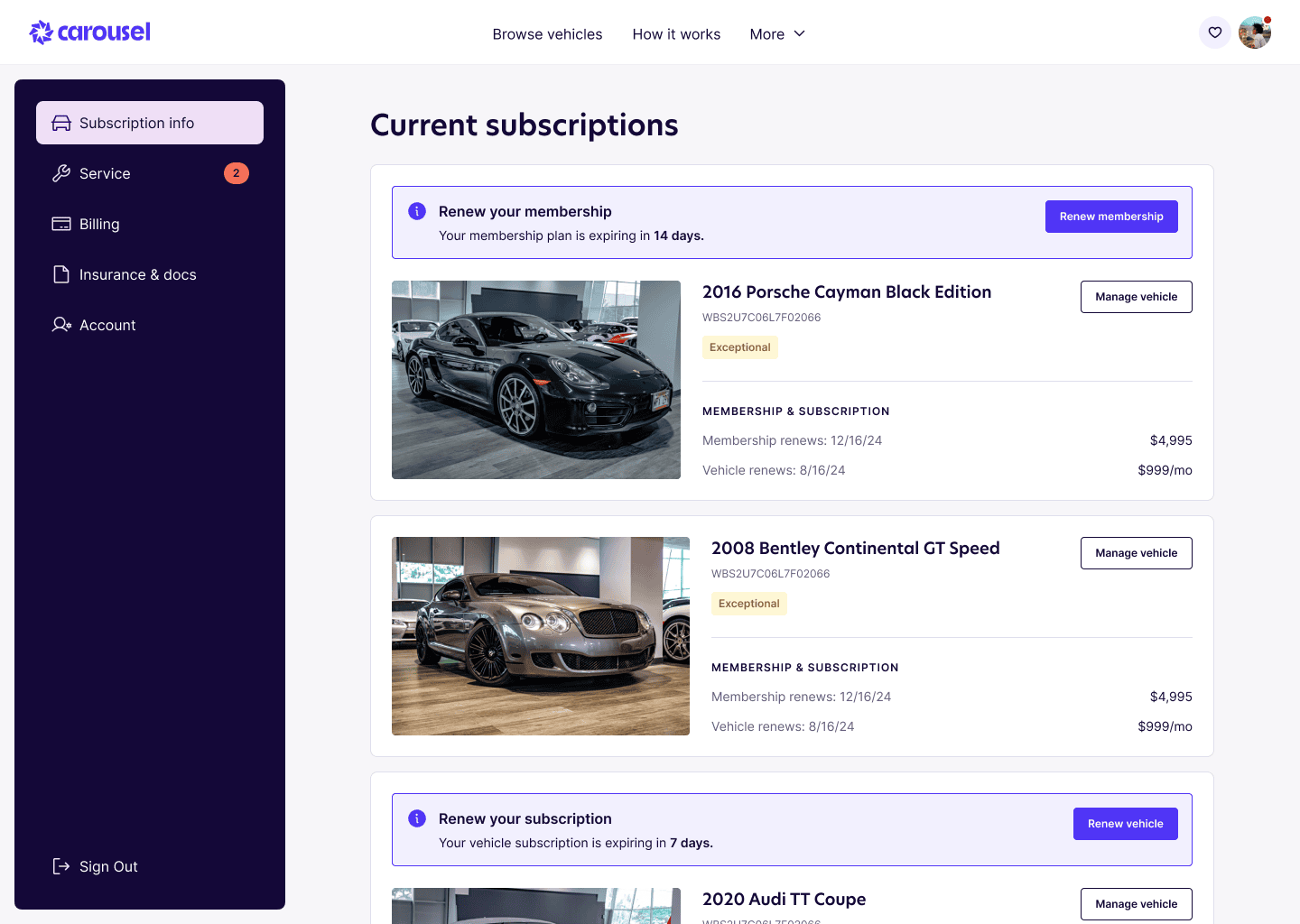
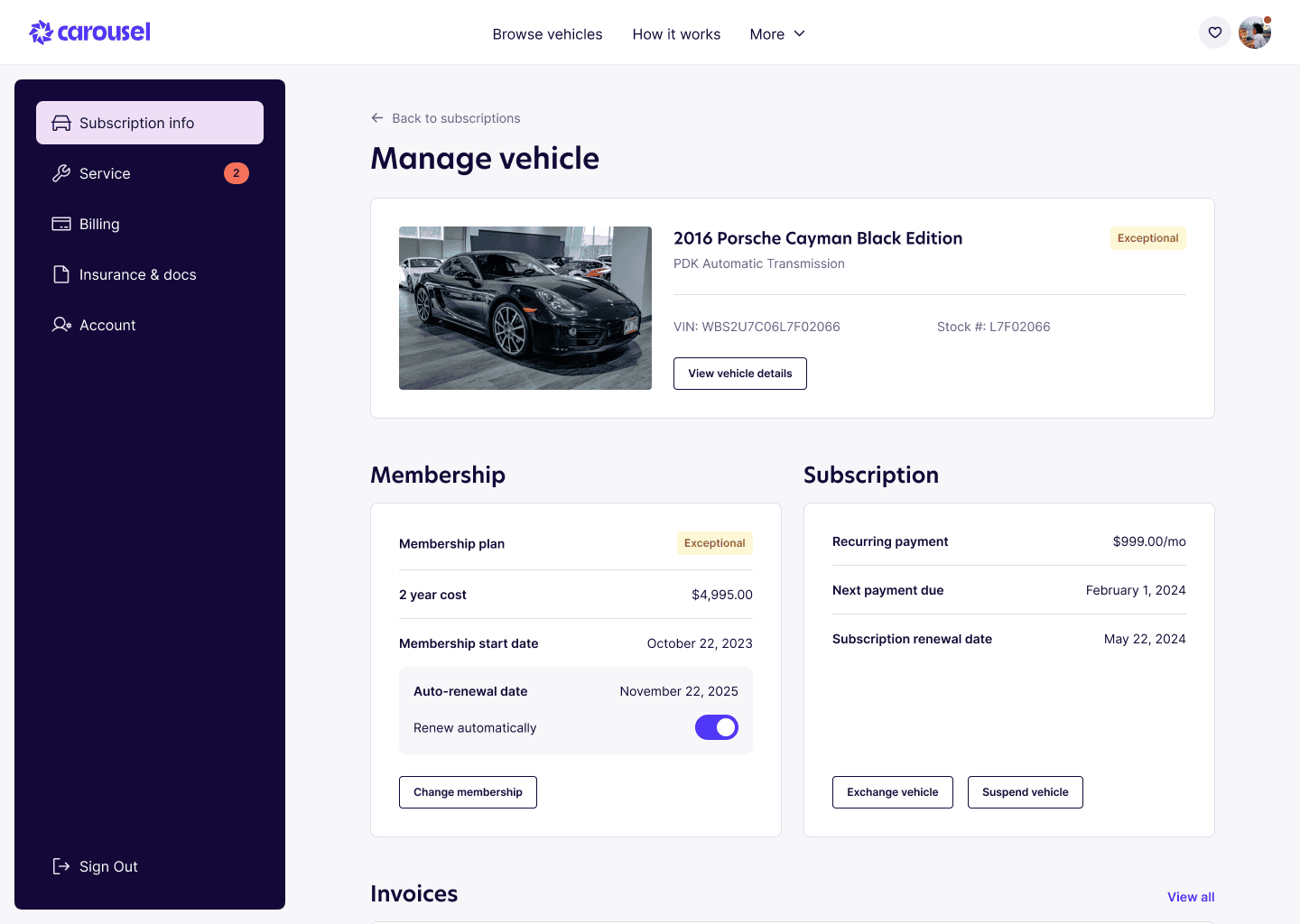
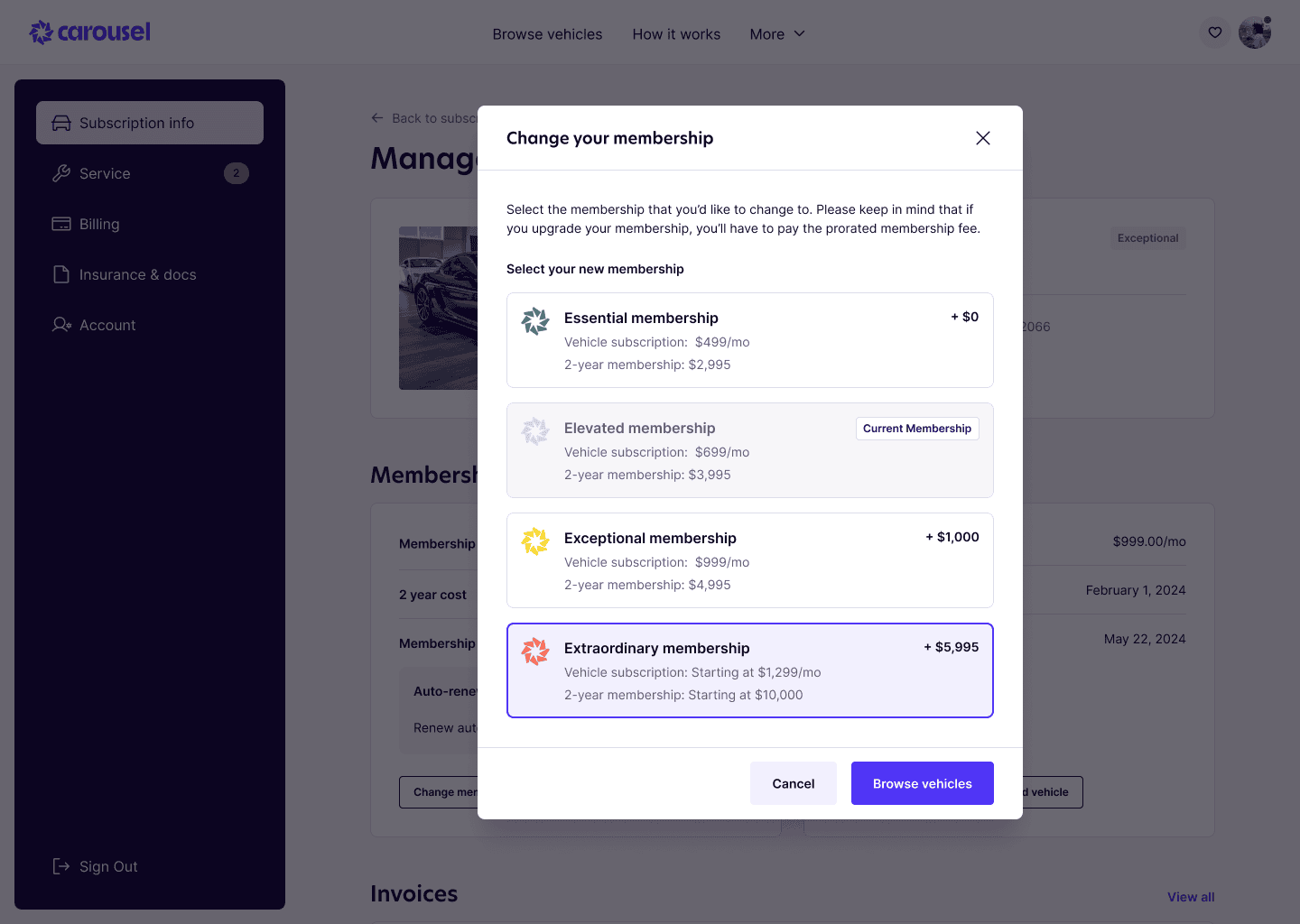
Renewal flow
Shipped
A complete redesign of the Carousel member application. Every major flow was rebuilt from scratch and handed off to engineering.
What shipped
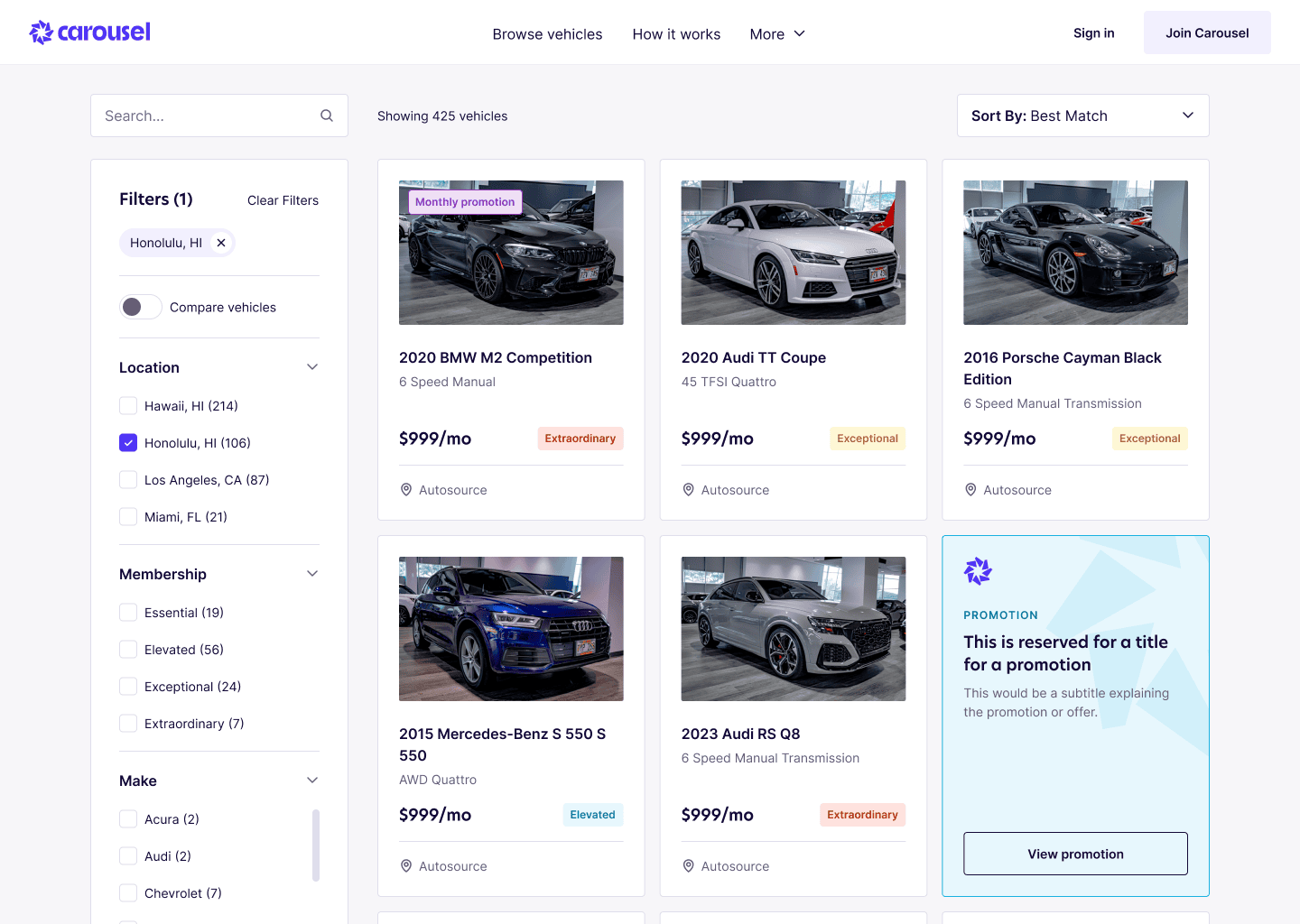
- Inventory browsing: membership tier, location, make, model, color, body style
- New customer reservation for solo and joint applicants, including inline credit scoring and DocuSign integration
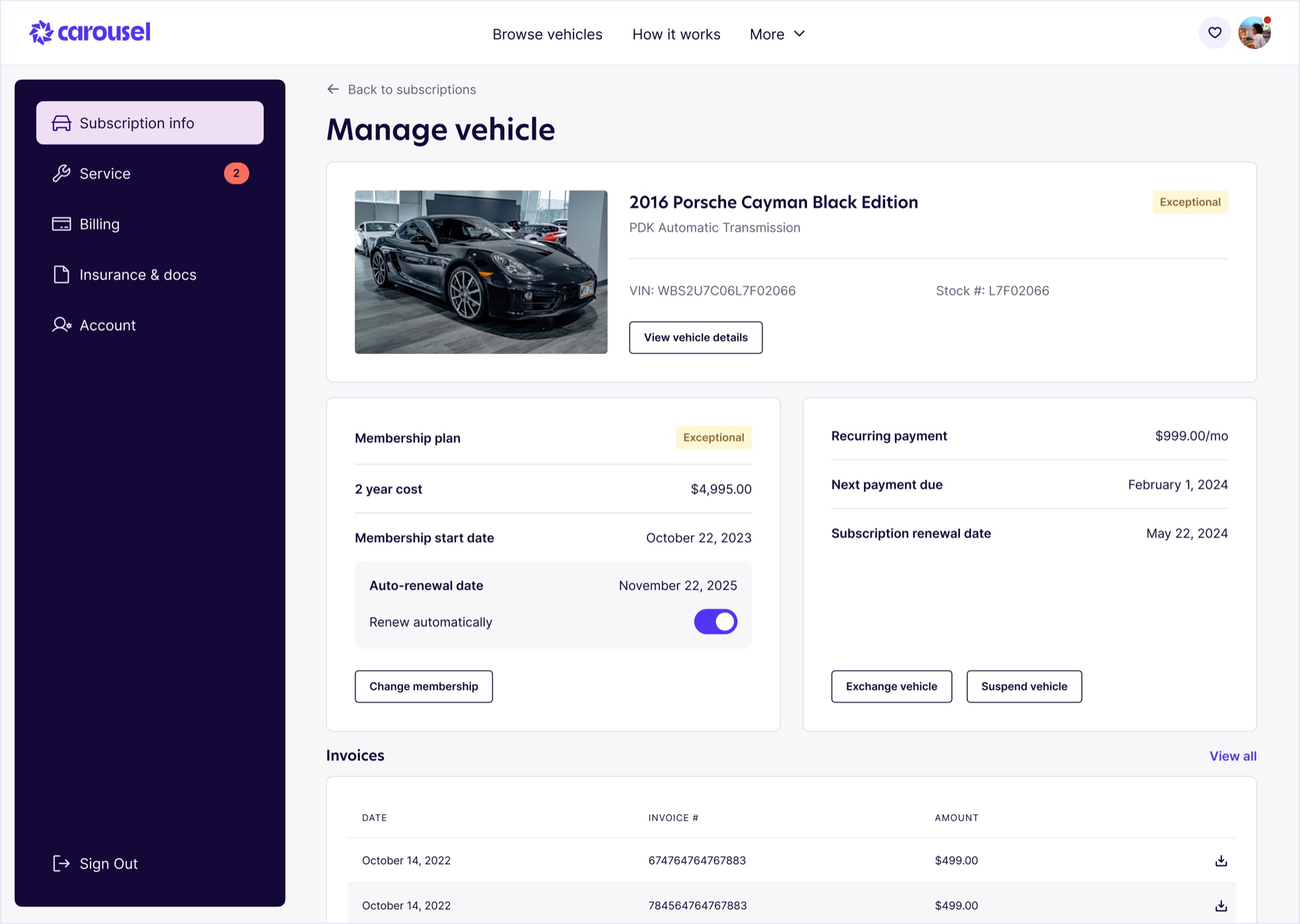
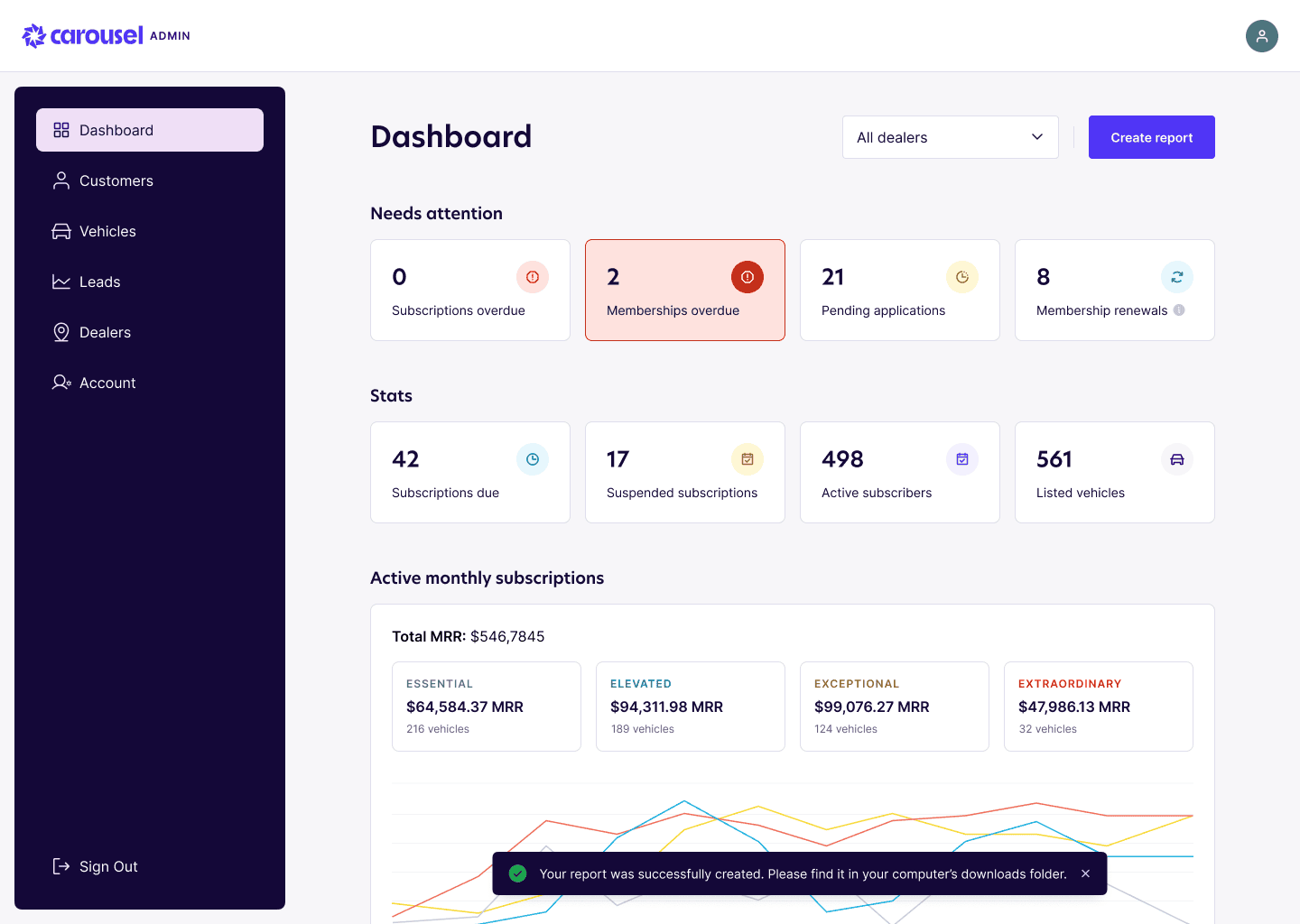
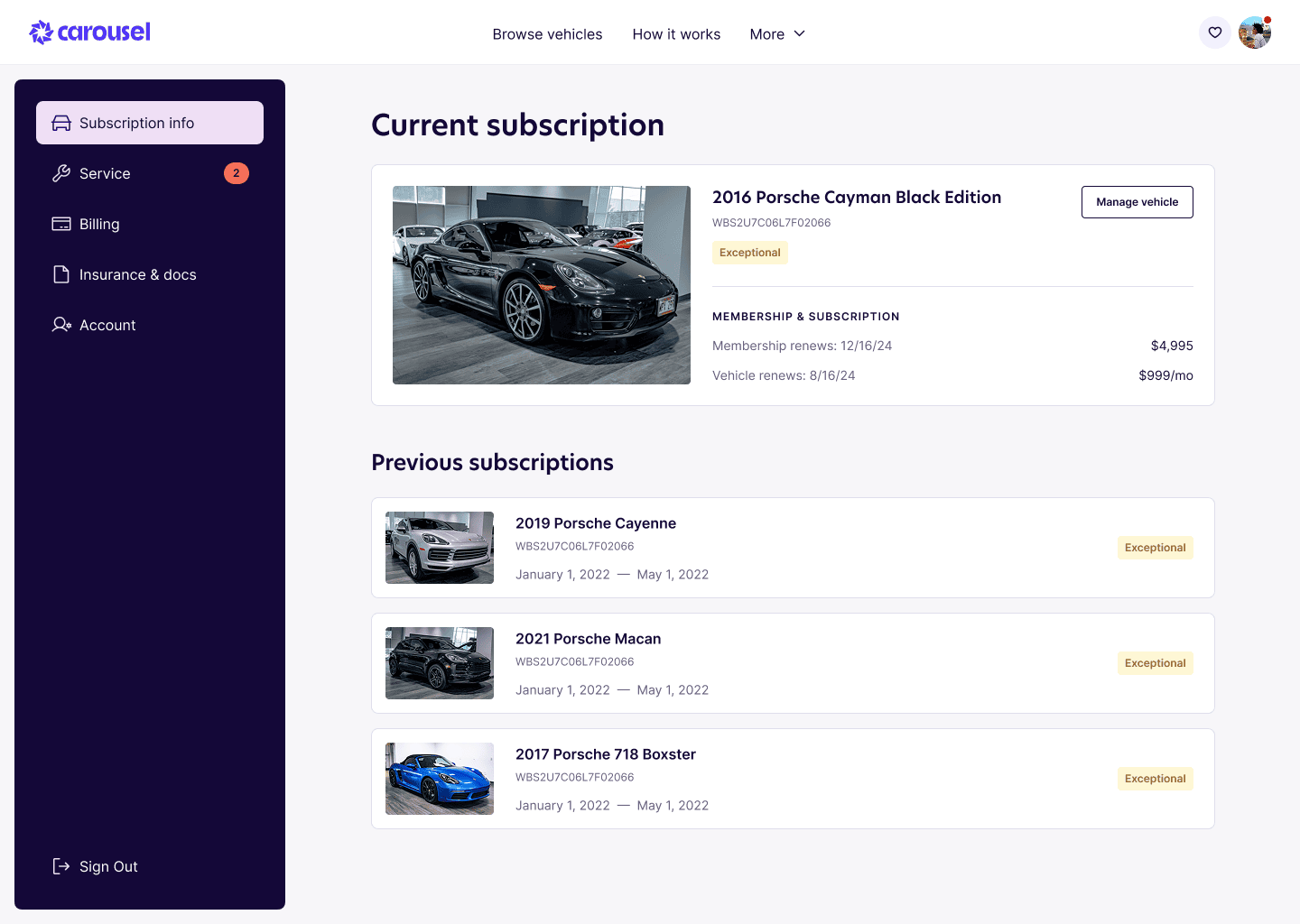
- Member dashboard with subscription status, renewal prompts, and trade-ins
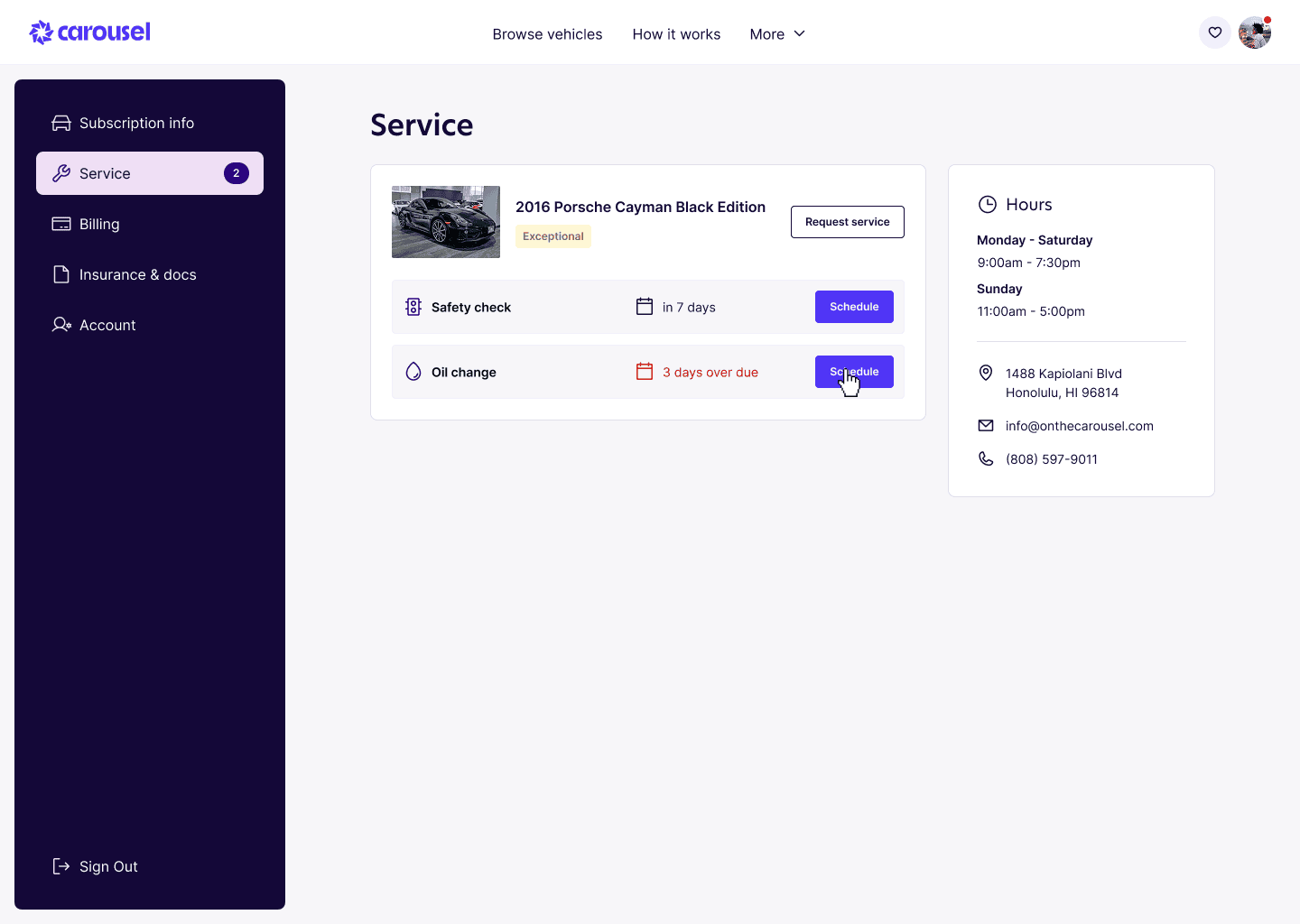
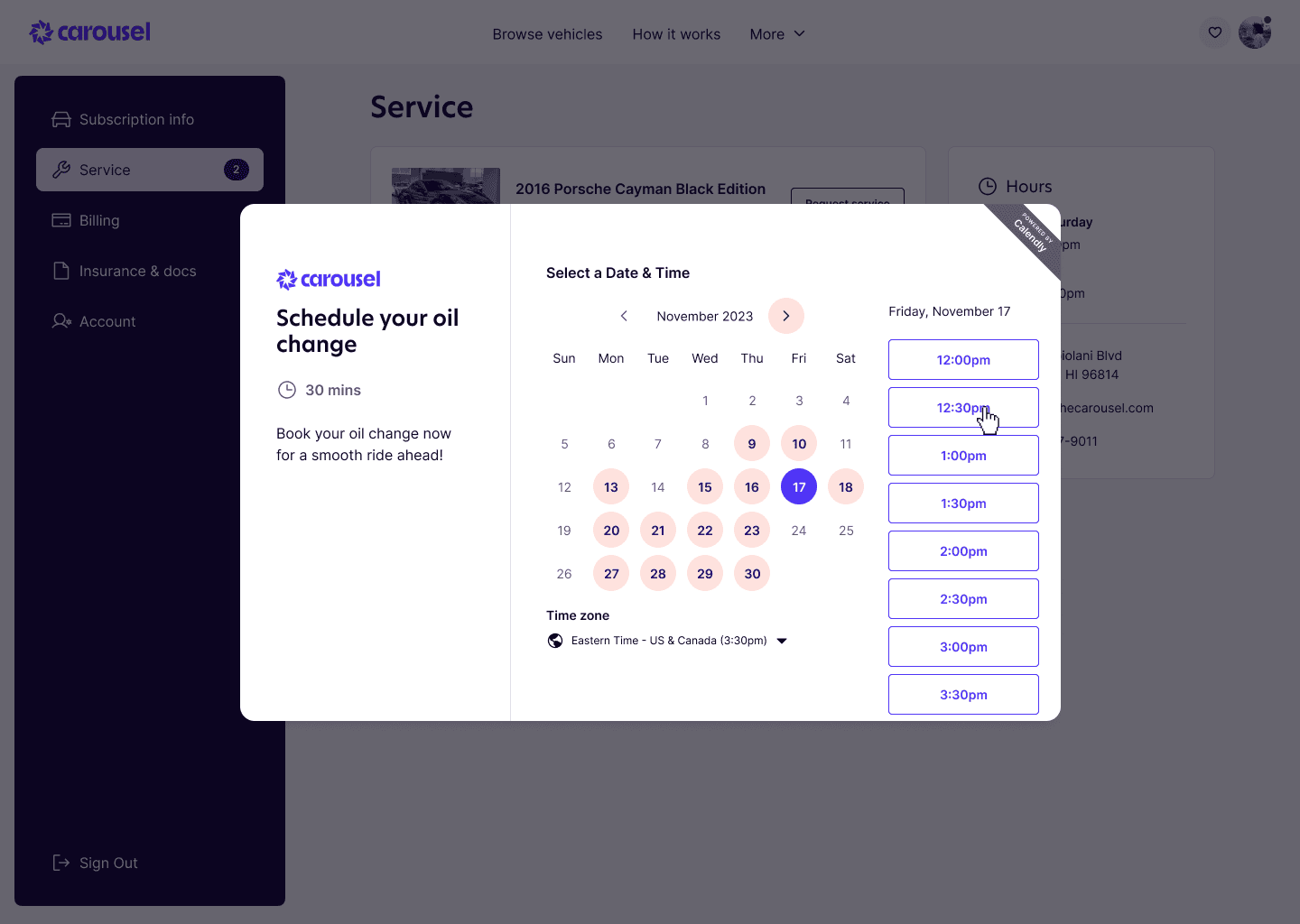
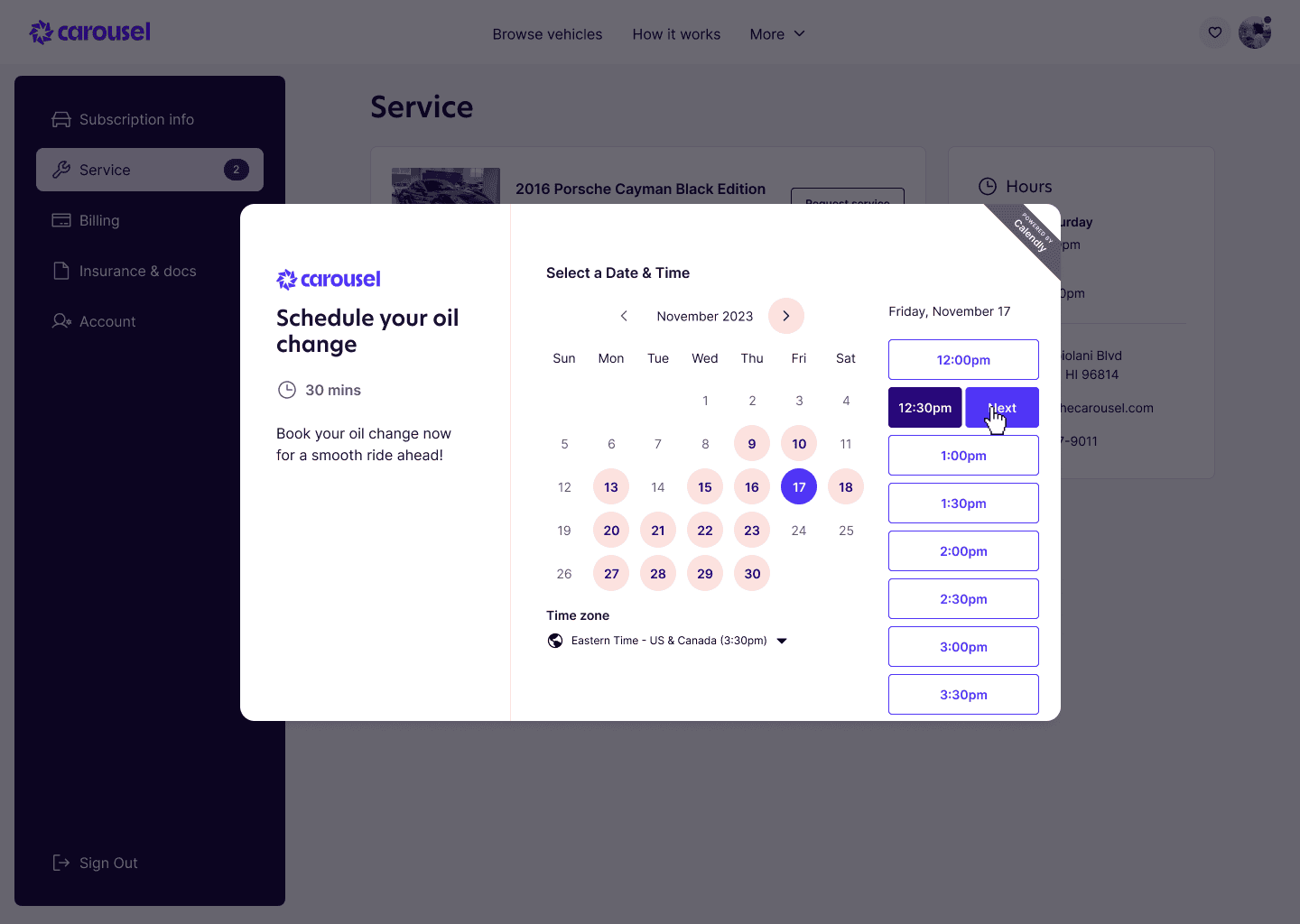
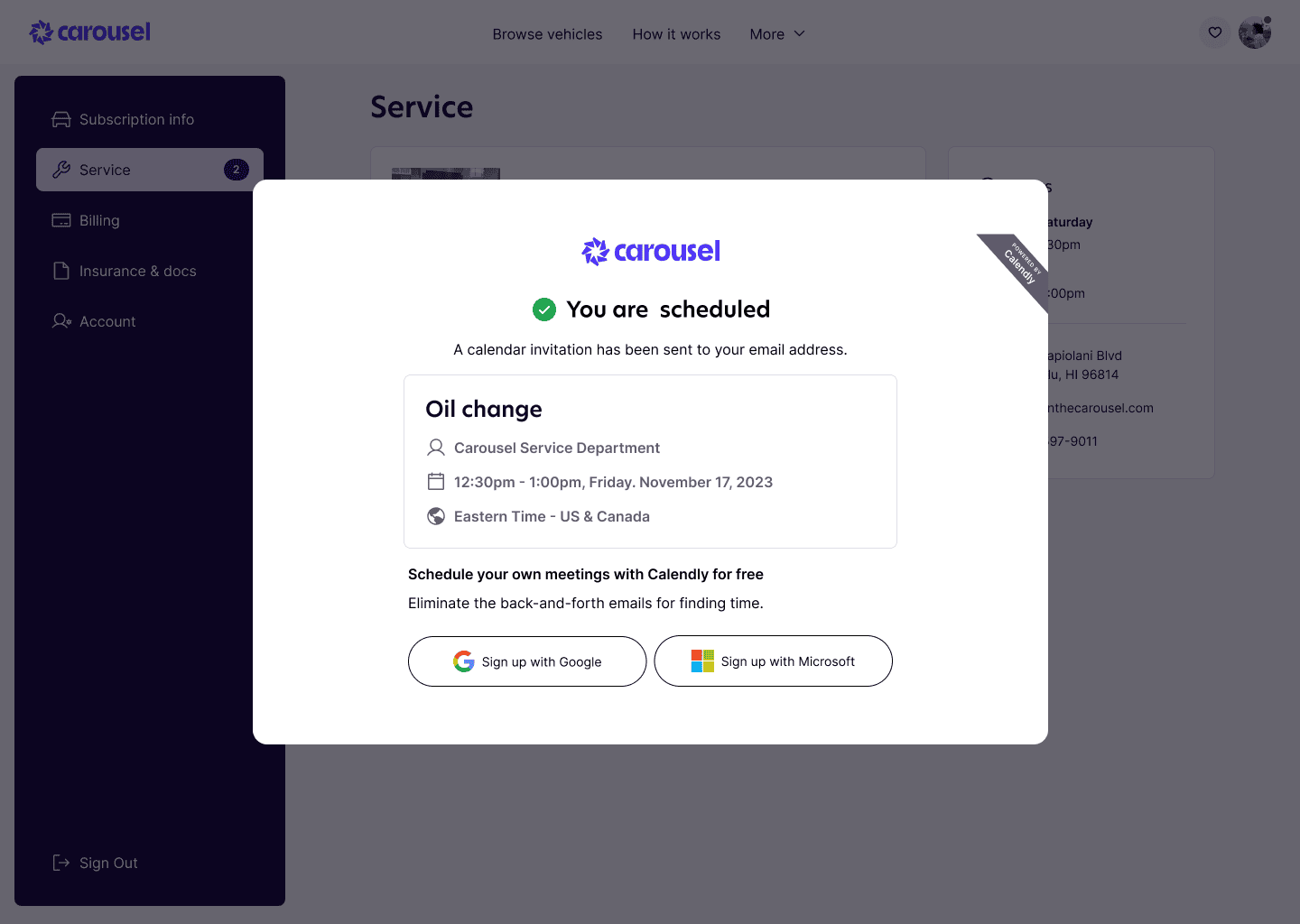
- Service scheduling with calendar and time slot selection
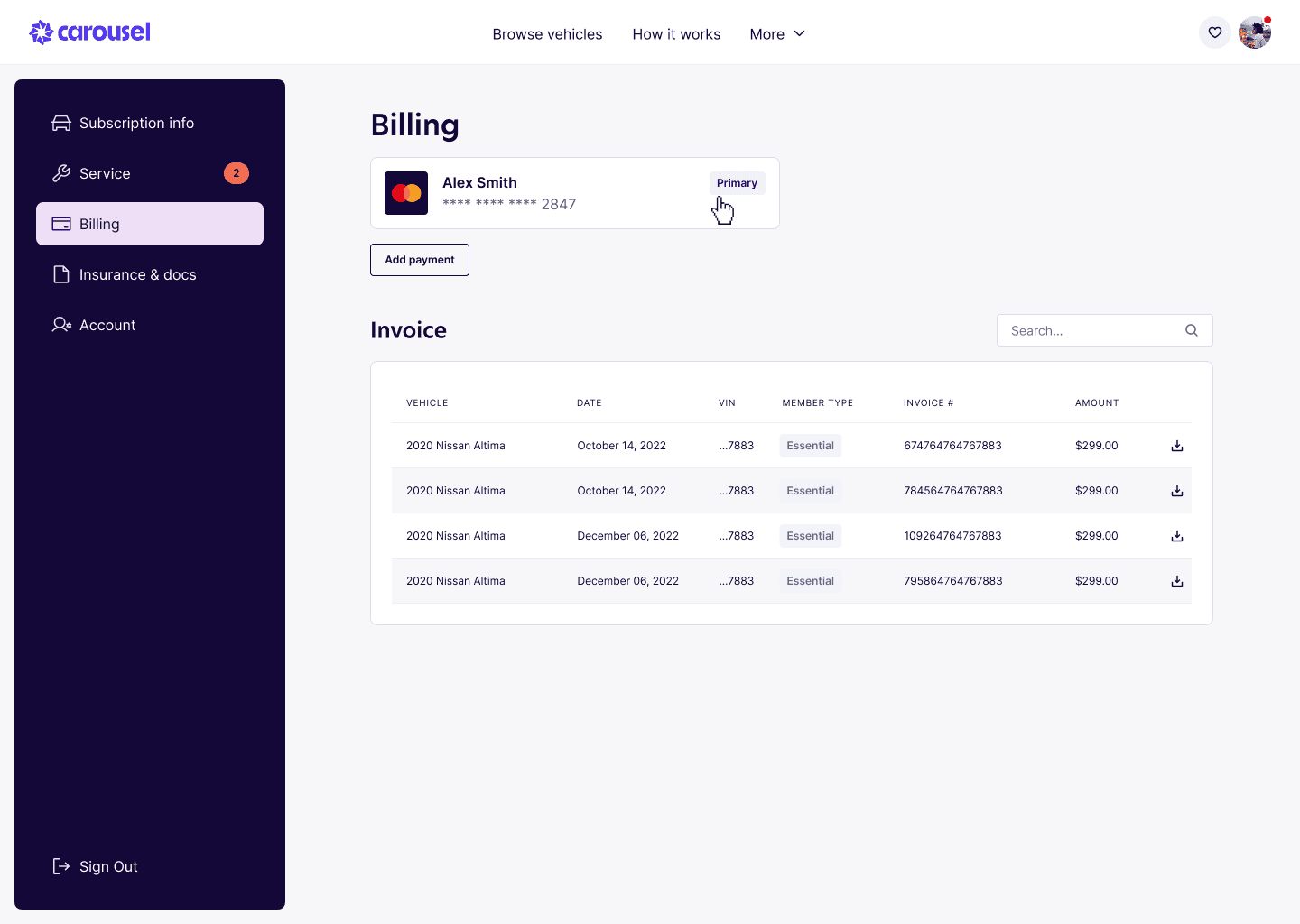
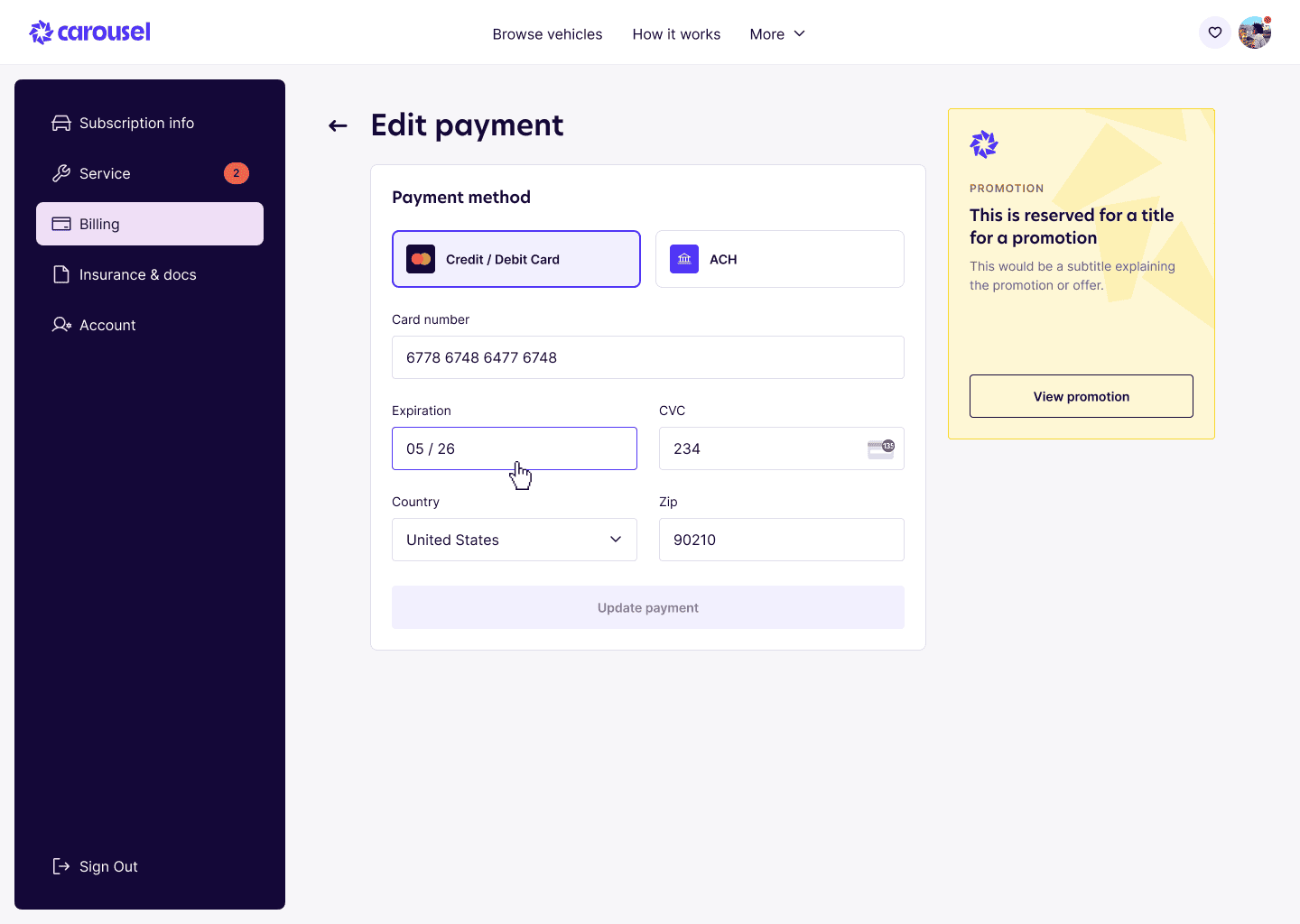
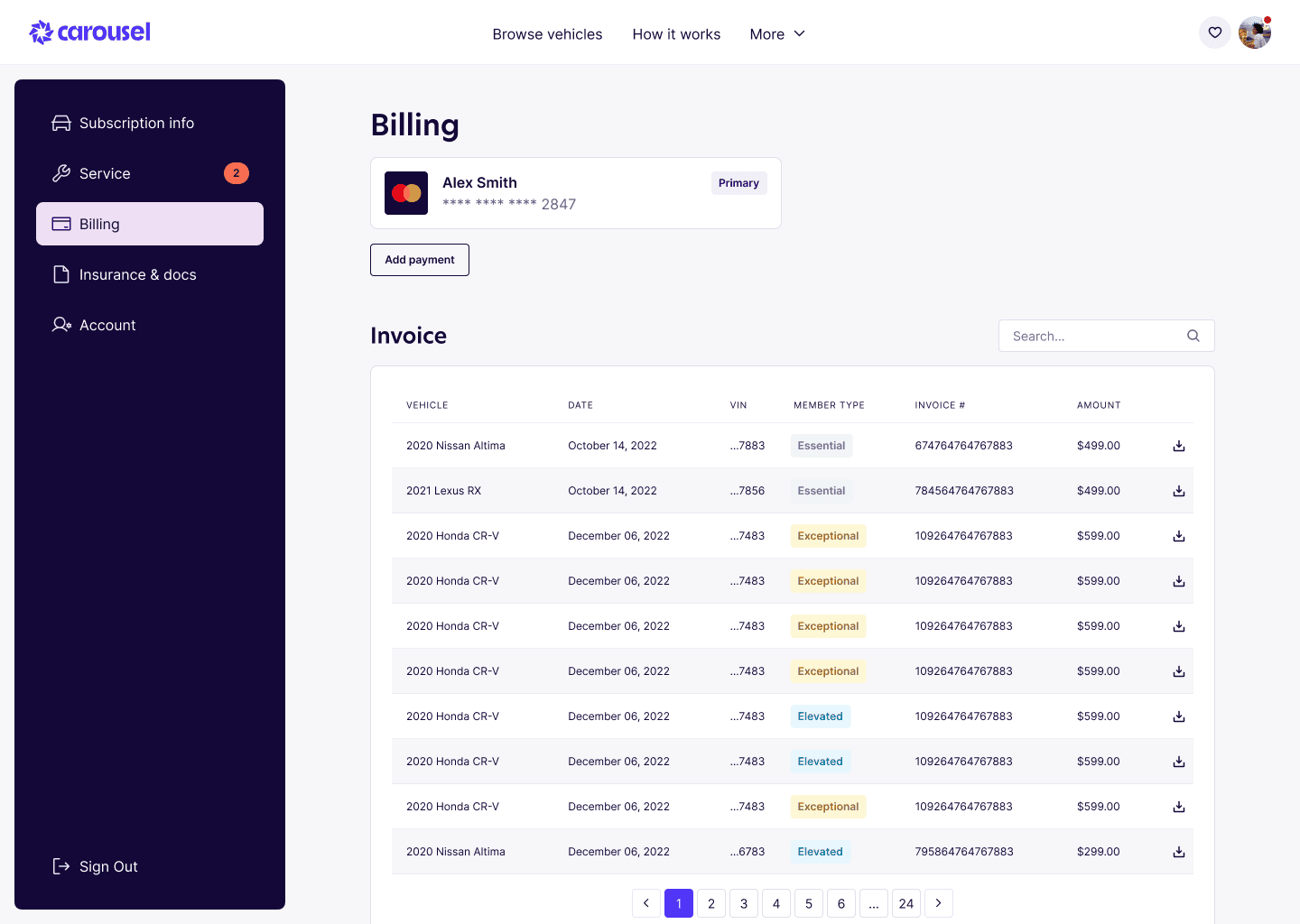
- Invoice history, payment method management, and multi-vehicle billing support
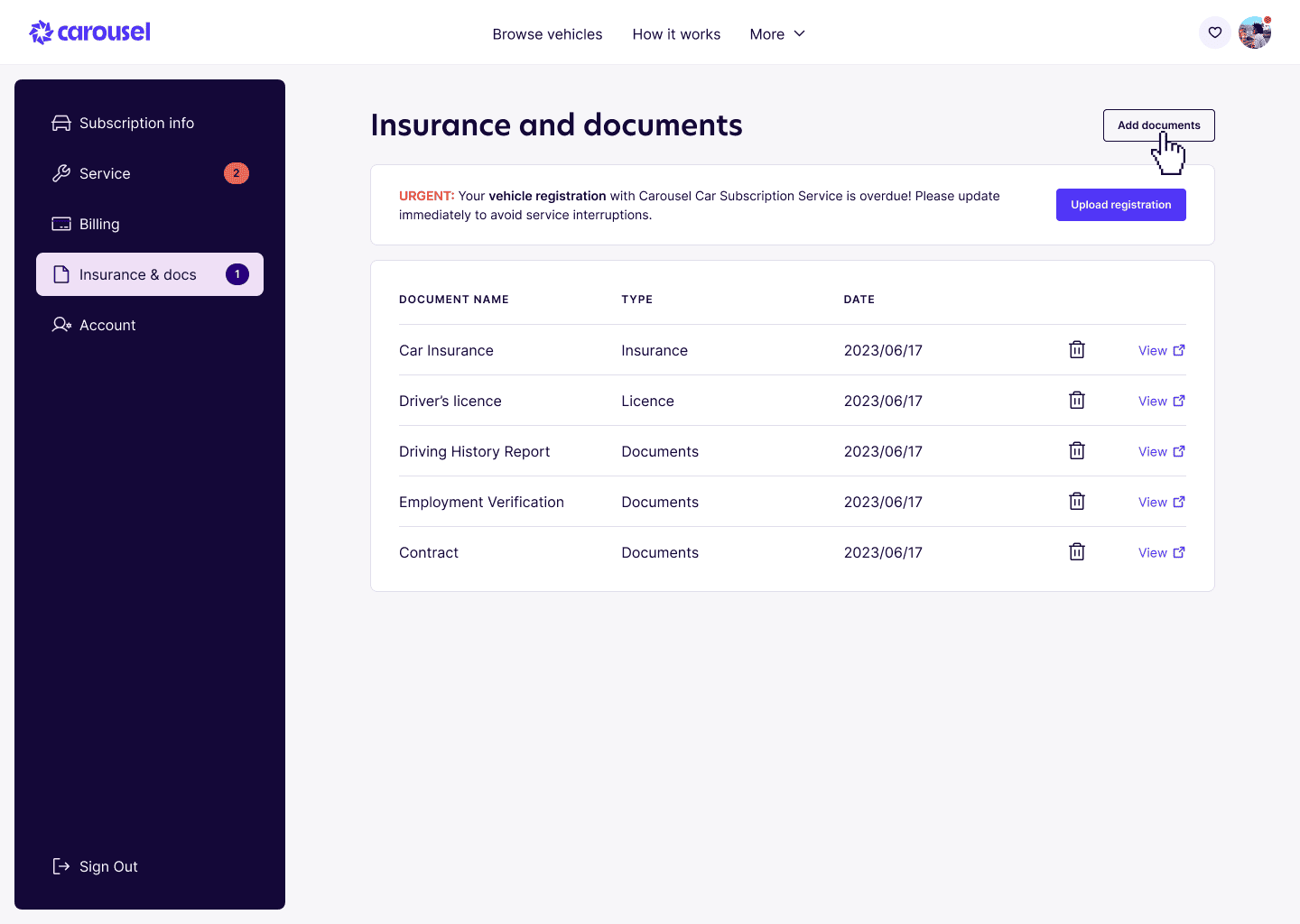
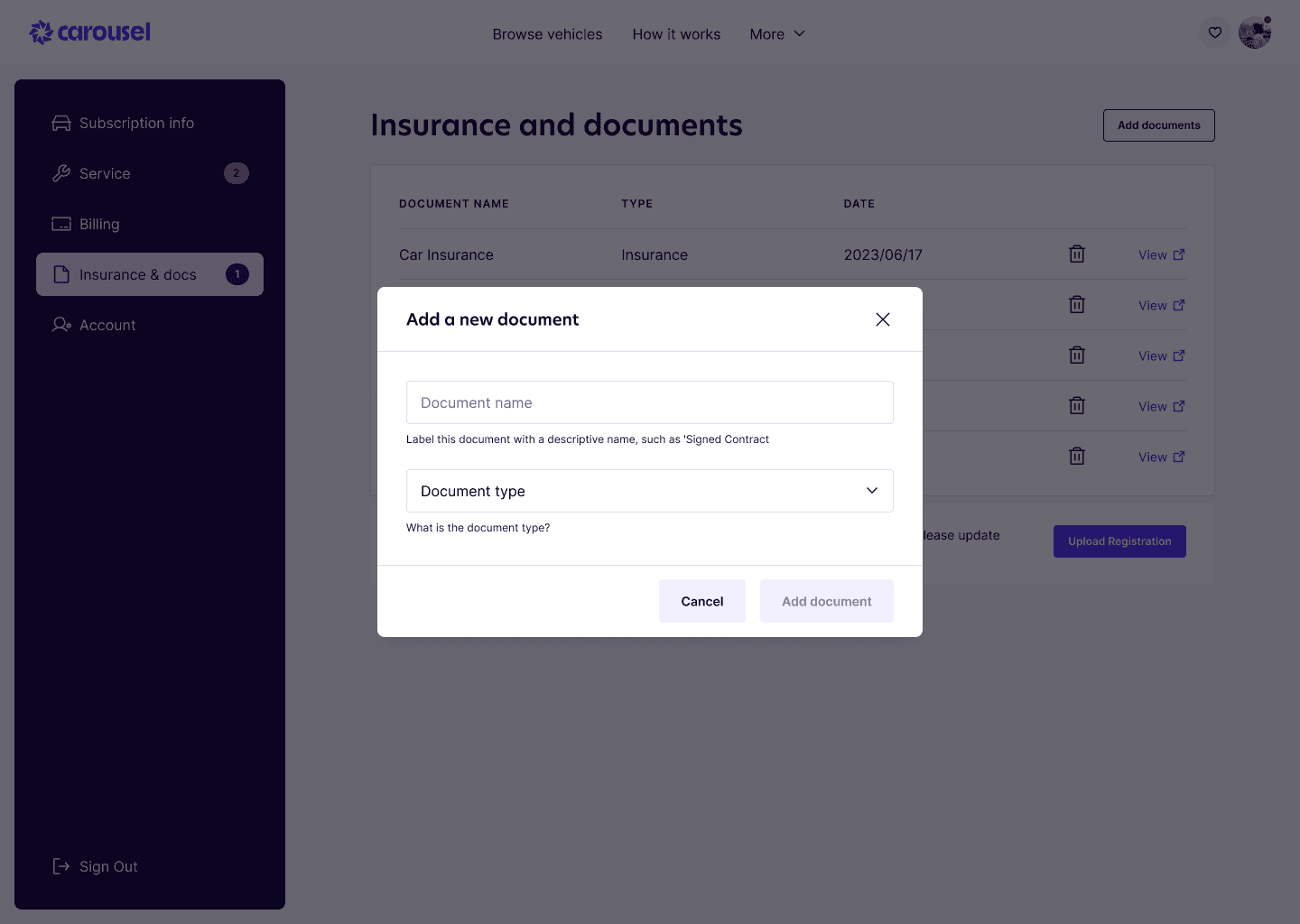
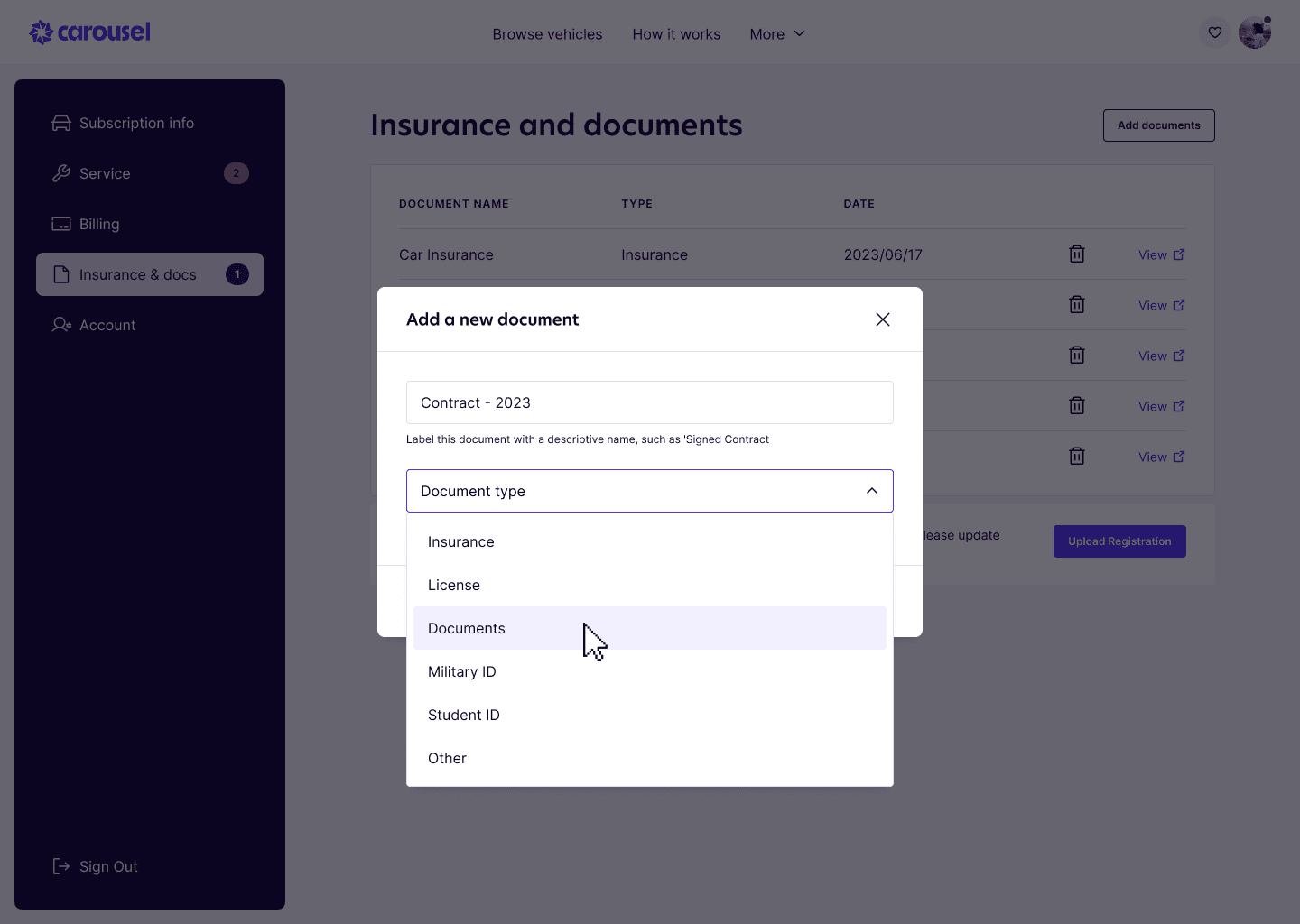
- Insurance and document vault with upload, categorization, and status alerts
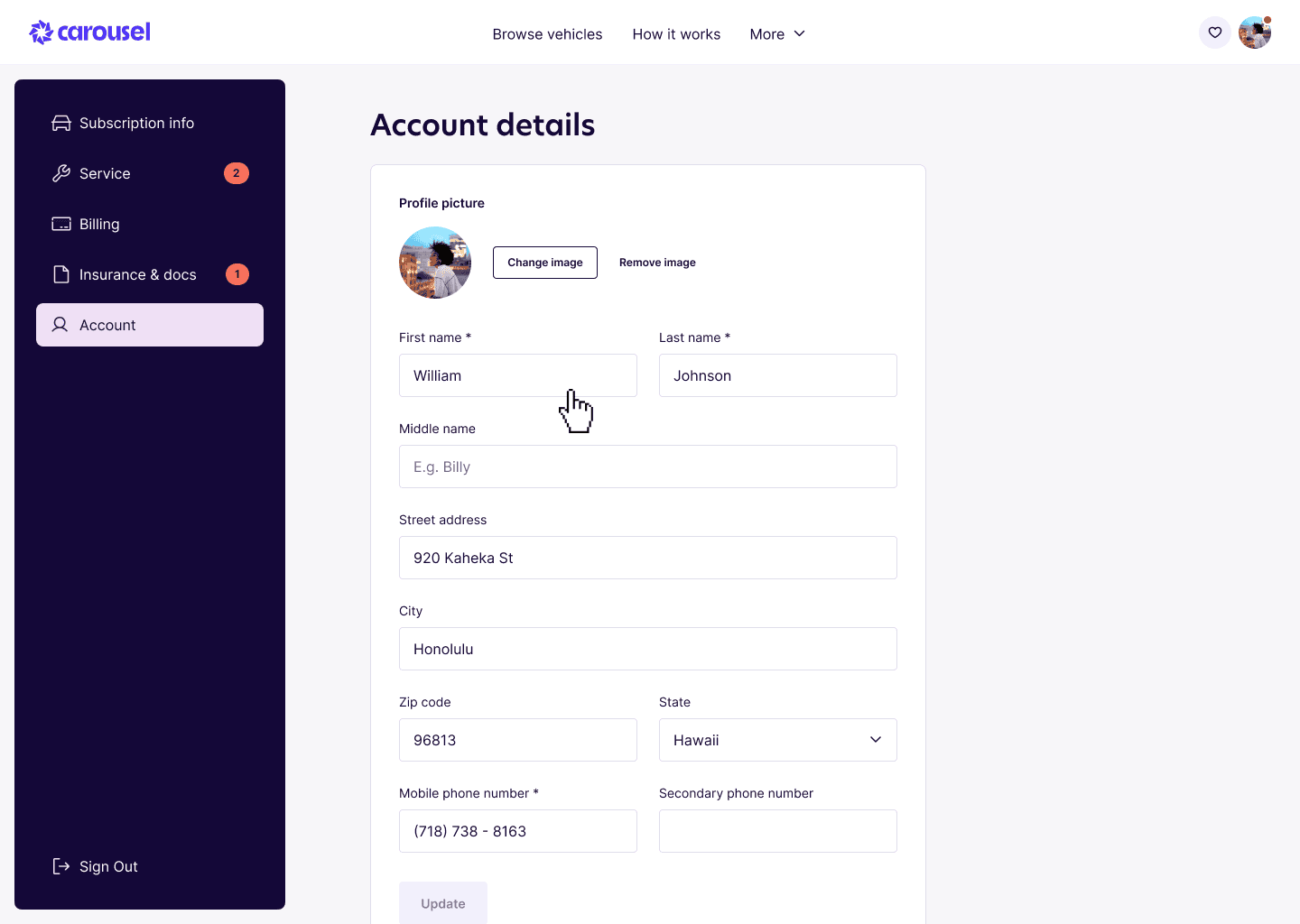
- Account settings with profile, email, password, and notification preferences
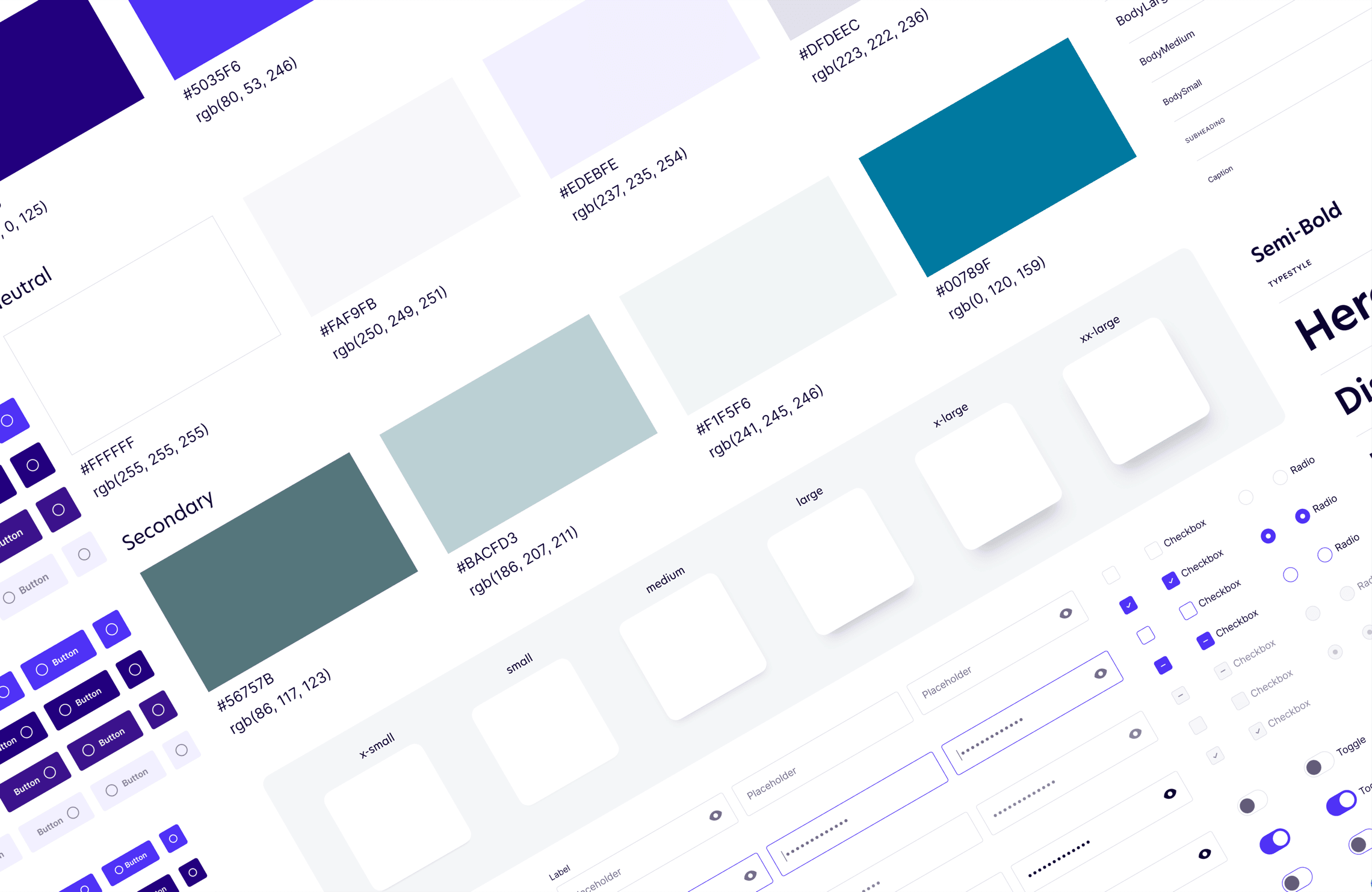
- Design system covering components, states, and patterns across the product
Build
Three flows documented before handoff: new customer subscription, renewal, and 6-month trade-in. Every screen state, branch condition, and required field mapped.
The design system shipped as a live Figma library. Component naming matched engineering's structure to reduce translation time.
A feature requirements document traced every feature to a user need, giving stakeholders a single source of truth for scoping and QA.
Design system components
Results
Carousel has been operating a subscription model since 2013 and describes itself as the nation's largest vehicle subscription inventory. The redesign replaced staff-dependent flows with a complete self-serve member experience covering reservations, renewals, and trade-ins. That design system became the shared infrastructure for a SaaS platform now expanding to dealerships nationwide.
Learnings
The biggest challenge was coordination, not design. Two designers working in parallel will diverge without a shared foundation, and the design system was the infrastructure that kept us aligned.
Complex flows contain business logic invisible until you map every branch. The renewal flow alone had seven distinct states.
Three personas with conflicting expectations had to coexist in the same product. Reconciling them directly shaped the filter architecture and tier-based display logic.